Showing posts with label ADVOCACY. Show all posts

Saturday, April 26, 2008

Bad Medicine


Source:United States Holocaust Memorial Museum. "Nazi Medical Experiments." Holocaust Encyclopedia. http://www.ushmm.org/wlc/media_ph.php?lang=en&ModuleId=10005168&MediaId=2655(accessed May 17, 2009).


Qui rides? Mutato nomine de te fabula narratur.


Who are you to laugh?
Change the name, and the story is told of you.
Horace


If you were asked to give a quick review of all you knew about the Holocaust, what would spring to mind? Images of train cars carrying people like cattle? Piles of discarded shoes and clothing? Perhaps gas chambers, starving people pressed against the gates of Auschwitz? You were probably raised having read the same history books I read, and maybe you picked up some story books about the Nazi era. SS soldiers, jackbooted thugs, barking dogs, machine gun fire...all are very real images of the Holocaust. But do you know how it all began?

When I became Ciarra's mom, I also became aware of some terrible realities. The abortion statistics are one of them. Over 90% abort for prenatal diagnosis. Some Doctors, who swear an oath to heal, are giving out false and misleading information, or no information at all. Their complicity in this modern day eugenics nightmare is without question. As I learned about these statistics, about the rush to feed bad information to already scared mothers, I kept hearing words bandied about that seemed overblown and cruel. Nazism, Hitleresque, even "Eugenics" seemed to push buttons and bring about cries of "No Fair!"

Many people say that to draw a parallel between the modern day extermination of babies with Down syndrome and Nazi Germany is ludicrous. Of course, I am passionately on the side of the babies, but I wanted to understand where such thinking comes from. I think I understand now. And yes, the parallels are there.

In the not-so-distant-past, a great injustice was committed against an entire people. And although I by no means intend to exclude their suffering, I am not talking about the Jewish people. I am talking about a time before the Holocaust, a time when Doctors and Nurses-not SS men, learned to kill their most vulnerable patients. It was practice, in a literal sense, for the coming Holocaust. It was not in places with names like Auschwitz, Dachau, Buchenwald, Birkenau, or Treblinka that the killing began. The Nazi killing machine got its start quietly, in the Pediatric wards and asylums of Germany herself, carried out by the physicians of Germany, who perverted "healing" into killing.


Soon after Hitler took power, the Nazis formulated a policy based on their vision of a biologically "pure" population. Their goal was to create an "Aryan master race." On July 14, 1933 a new law called "Law for the Prevention of Progeny with Hereditary Diseases," was passed. It forced the sterilization of all persons who with disabilities considered hereditary, such as mental illness (schizophrenia and manic depression), mental retardation ("congenital feeble-mindedness"), physical deformity, epilepsy, blindness, deafness, and severe alcoholism.

Source:United States Holocaust Memorial Museum. "Handicapped." Holocaust Encyclopedia. http://www.ushmm.org/education/resource/handic/handicapbklt.pdf(accessed May 17, 2009).

In 1933, Hitler organized a top secret committee called the KdF, Kanzlei des Führer, which means Hitler's Personal Chancellery to head the T4 program. To hide the true intentions of the KdF, they came up with a fictitious name "The Reich Committee for the Scientific Registration of Serious Hereditarily and Genetically Based Illnesses" known simply as the "Reich Committee."


What the world would come to know in later years as the T4 Program was created by Hitler's Nazis in 1939 to deal with the disabled, mentally ill, and elderly. T4 was named after the physical address of the Berlin administrtive offices of the program, Tiergarten Strafe Number 4, a confiscated Jewish villa. The tinderbox was set, all that was needed was a spark to light the flames of eugenic mass murder. The Nazi hierachy would continue to wrestle with the morality and legality of murdering it's most vulnerable, the people they referred to as "defectives", until early 1938. It was then that fate brought to them the parents of the little boy who would become the first to die by euthanasia. His death fed the desire for the elimination of lebensunwertes Leben ("life unworthy of life"), and catapulted the T4 program into history.

The father of "Baby Knauer," an infant born blind and missing his leg and part of his arm, wrote Hitler requesting permission to have his child "put to sleep." As described by Lifton and other historians, Hitler was quite interested in the case and sent one of his personal physicians, Karl Rudolph Brandt, to investigate. Brandt's instructions from his Führer were to verify the facts of the baby's condition and, if found to be true, to assure the child's doctors and his parents that if he was killed, no one would face punishment. The doctors in the case who met with Brandt agreed that there was "no justification for keeping the child alive." Baby Knauer soon became one of the first victims of the Holocaust.

Hitler later signed a secret decree permitting the euthanasia of disabled infants. Sympathetic physicians and nurses from around the country--many not even Nazi party members--cooperated in the horror that followed. Formal "protective guidelines" were created, including the creation of a panel of "expert referees," which judged which infants were eligible for the program.


Source:Killing Babies, Compassionately
The Netherlands follows in Germany's footsteps.
by Wesley J. Smith
http://www.weeklystandard.com/Content/Public/Articles/000/000/012/003dncoj.asp?pg=2(accessed May 17, 2009).


In October 1939 Adolf Hitler wrote the following memo: "Reich Leader [Philip] Bouhler and Dr. med. [Karl] Brandt are charged with the responsibility of enlarging the authority of certain physicians, designated by name, so that patients who, on the basis of human judgment, are considered incurable, can be granted a mercy death after a discerning diagnosis."


Source:
http://www.chgs.umn.edu/histories/documentary/hadamar/the_occurrence.html(accessed May 17, 2009).


Source: http://www.holocaustchronicle.org/StaticPages/169.html(accessed May 17, 2009).


The wheels were quickly set in motion, elaborate plans laid out fo the "mercy killings" of hundreds of thousands of Germany's most vulnerable. The Third Reich's drive for racial purity left no room for anyone who was "different". Although the go-ahead for the euthanasia program was given in October 1939, the decree legalizing it was backdated to September 1, the beginning of World War II. Hitler knew that his people would find the killings more palatable if they were neccessitated by war. A propaganda campaign against those deemed unworthy was unleashed at the same time.


Doctors and Nurses were ordered to document any deviation from "normal" in babies up to 3 years old, particularly new births. Any baby born with even the mildest birth defect was catalogued and marked for death, including all infants born with specific medical conditions:

Idiotism and Down Syndrome (in particular cases with blindness or deafness);
Microcephaly (abnormally small head);
Severe or Progressive Hydrocephaly;
All deformities, in particular missing limbs, serious head and spinal column defects etc.;
Paralysis, including Little's sickness (Spastic Diplegia). The process for identifying them was mandatory. The families were told that their children were being sent to asylums for therapy, and often never knew the real reasons for the deaths.


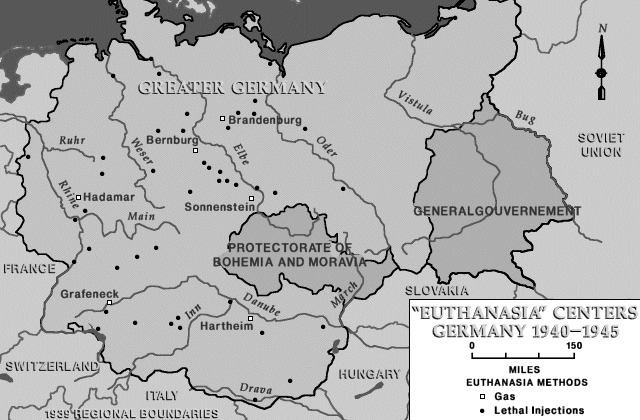
The children were sent to various Institutions, where they lingered for just enough time to make it appear they were receiving treatment. Generally within weeks of arrival, they were dispatched with injections of drugs such as Luminal (Phenobarbitol) or simply starved to death. Later, as the Doctors perfected their gruesome work, they turned to gassing ever-growing numbers of their patients with carbon monoxide. Families who did not want their children taken away often faced a beaurocratic nightmare, the children were moved often to disguise the killings as natural, with death certificates to match. There were six euthanasia centers in Germany and Austria: Hartheim, Sonnenstein, Grafeneck, Bernburg, Hadamar, or Brandenburg.

The death notices were form letters:

As you have certainly already been informed your daughter,__________ transferred to our establishment by ministerial order. It is out painful duty to inform you that your daughter died here on __________of influenza, with an abscess on the lung. Unfortunately all efforts made by the medical staff to keep the patient alive proved in vain. We wish to express our sincere condolences at your loss. You will find consolation in the thought that the death of your daughter relieved her from her terrible and incurable suffering.

According to instructions from the police, we were obliged to proceed immediately with the cremation of the body. This measure is intended to protect the country from the spread of infectious diseases, which in time of war pose a considerable danger The regulations must, therefore be strictly adhered to.

Should you wish the urn to be sent to you - at no charge - kindly inform us and send us the written consent of the cemetery authorities. If we do not receive a reply from you within a fortnight, we shall make arrangements for the burial of the urn. Please find enclosed copies of the death certificate to be presented to the authorities. We suggest that you keep them in a safe place.

Heil Hitler (Kogen et al, p. 29)


As well as newborns, the doctors had to declare all children below the age of three who were affected by these conditions. The decree attached a sample declaration form. This form requested the following information, other than the name, age and sex of the child: a detailed description of the sickness; an explanation of how the child is affected by the sickness; details related to the child's hospitalization and the name of that hospital; an estimate of life expectancy and the chances of improvement. The form was only on one side of a page; the space for detailed description was very little. The midwives and doctors had to send their declarations to the local public health offices, who had to verify the information and then send the declaration to the Reich Committee at the 101, Berlin W 9 post office box.

The initial phase of the decree was set up to give the impression that the minister's objective was to realize a scientific survey which was to help children suffering from serious disorders: "The timely registration of suitable cases with deformations and hereditary mental disorders was essential for the clarification of scientific problems". The decree does not state the real reasons behind this compulsory declaration of disabled children.

The experts never checked the children for such deformities, nor did they consult existing medical casuistry. They simply gave a mark alongside the names on a piece of paper headed "Reich Committee", a simple plus (+) indicated inclusion in the program, which meant the killing of the child; a simple minus (-) indicated exclusion, which meant the child lived. If the expert was undecided, he wrote "observation", meaning the decision was deferred.


To kill the children, who, once taken into the operation network, became known as "children of the Reich Committee", the Committee created so-called wards of expert assistance for children in State hospitals and clinics. The first of these wards was quickly established under the direction of Hans Heinze at the Brandenburg-Gorden institute; time was needed to create others because the KdF had to recruit directors for these institutes designed to host wards for euthanasia, and doctors who were willing to do it.


On the 1st of July 1940, the RMdl issued a leaflet which announced the creation (which in reality took place some time previously) of the first pediatric ward of the Reich Committee in Brandenburg-Gorden, near Berlin. This measure, continuing to disguise the real reason for the program, informed health offices that "under expert medical supervision, the pediatric psychiatric ward in Gorden, near Brandenburg on the Haven, would supply all possible therapeutic operations for the children, and was made possible thanks to recent scientific discoveries".

From the beginning, even the doctors compiling the declaration forms did not know the truth. A health official, interested in organising the transfer of some children to the new Gorden institute, complained that the institute did not reply to his questions on costs. The Reich Committee possessed the resources to cover all expenses when there were no alternatives, but they tried, when possible, to persuade parents or support bodies to pay for the secret killings.


Source: Memories-The T4 Project. "Memories." Rai Social Action Department. http://www.segretariatosociale.rai.it/inglese/atelier/altriluoghi/memorie/altriluoghi_T4.html
(accessed May 17, 2009).

NOTE: one of the most comprehensive accounts of the t4 program that I have read


In the end, the Reich Committee established at least 22 child euthanasia wards. Some of these wards provide little information, other than their existence; others were covered up by the public shame following the revelations that emerged during the trials which were held after the war.


The Gorden ward, and its methods introduced by Heinze, made up the model for other pediatric wards; Gorden became the training center for other doctors responsible for the killing of children. Gorden had ample research equipment where Heinze and his interns carried out experiments on children before and after death. Gorden also used the nearby killing center in Brandeburg to guarantee the swift killing of groups of children.

In 1940 at least three other pediatric euthanasia wards were established. One of these was the large Am Steinhof institute in Vienna. In July 1940, the Am Spiegelgrund pedagogic sanitarium for children was inaugurated, with 640 beds in buildings situated within the confines of the Amo Steinhof. its function was a pediatric euthanasia ward for Austria.


In 1940, another pediatric euthanasia ward was established in the Federal State of Bavaria, in the large Eglfing-Haar public institute near Munich. This hospital complex hospitalized both adults and children; the child euthanasia ward was located far from the wards where normal patients were hospitalized.


We have an unusually vivid testimony of Eglfing-Haar before the official commencement of euthanasia practices. Lugwig Lehner, a Bavarian teacher, gave his testimony in 1946 in London, where he was then considered to be a German POW, based on his experience of a visit conducted by Pfannmuller.


having visited some wards, the director who, if I remember correctly was called Pfannmuller, led us to the pediatric ward. There were between 15 and 25 cots with as many children. I remember the frankness and the cynicism of his conversation:" these creatures are only a burden on our national health system. We don't kill them with poison, injections or methods that would allow the foreign press to stage a new smear campaign. Our method is much simpler and natural". I can still see this fat man in front of me who smiled smugly, surrounded by children that were dying of starvation. The assassin further highlighted that the children did not stop eating suddenly, but that their rations were slowly reduced.
2


http://isurvived.org/TOC-I.html


The child euthanasia policy was initiated and directed by KdF bureaucrats, but carrying it out was left to the specialists: the doctors in the pediatric wards. The KdF bureaucrats were not worried about the methods of eliminating children; they trusted the expertise of the chosen doctors. The doctors had to find the best methods. Therefore, during a meeting at the KdF offices, the choice of extermination technique was left to the discretion of the doctors in Bayer.

One method of killing was death by starvation. We know for sure that this method was at times applied: when the war came to an end, the rations of food were reduced to a point of going below the basic level of survival and "the death by starvation wards" were found in many institutes. Despite this, death by starvation was not the most used method of child euthanasia.


The preferred method was using drugs. Although the decision on the type of drug used was up to each specialist, the doctors shared information in relation to the drugs, exchanging visits or meeting in Berlin. Pfannmuller, for example, visited Am Steinhof in Vienna and noted that those who practiced euthanasia used Morphine-Scopolamine; however he preferred Luminal (sedative) and Veronal (sleeping pill) barbiturates. In Berlin, Bayer was informed of the effectiveness of Bromide, Morphine, Veronal and Luminal. Among these Luminal became the favoured method by the majority of doctors, with Morphine-Scopolamine a second choice, usually kept for those who resisted Luminal or Veronal.

The doctors could also choose how to administer the drug. Usually lethal drugs were administered in tablet form, other times in liquid form; on rare occasions, when the patient could not or would not swallow, an injection was given. Usually the tablets were dissolved in liquid such as tea so the child would ingest the drug with normal foods.

There is an evident advantage of such a method for a secret extermination operation. These drugs were regularly administered in every health structure; they only became lethal when the dosage was increased. Therefore, the children were not killed due to the ingestion of poisonous substances, but due to an overdose of a common drug. Furthermore, the overdose of barbiturates and analogous drugs did not achieve immediate death; they caused medical complications, in particular pneumonia, which, in the end (usually within two or three days) led to death. At this point, doctors could observe a "natural death". Even Pfannmuller, who after the war rejected all proof of being responsible for his patients' deaths by starvation, confirming this pretence in front of the US military tribunal: " I must underline that we are not dealing with poisoning. The child died due to pulmonary congestion, and not poisoning".
2


But the people were beginning to notice, and on an increasing scale, objections were being raised. In some cases, the objections were not moral ones, but legal affairs that demanded rules be put in place to cover up the killings by making them matters of law.

Letter from chief of institution for feeble-minded in Stetten to Reich Minister of justice Dr. Frank, September 6, 1940 ( Trials of War Criminals Before the Nuernberg Military Tribunals - Washington, U.S Govt. Print. Off., 1949-1953, Vol. I, p. 854).


Dear Reich Minister,

The measure being taken at present with mental patients of all kinds have caused a complete lack of confidence in justice among large groups of people. Without the consent of relatives and guardians, such patients are being transferred to different institutions. After a short time they are notified that the person concerned has died of some disease...

If the state really wants to carry out the extermination of these or at least of some mental patients, shouldn't a law be promulgated, which can be justified before the people - a law that would give everyone the assurance of careful examination as to whether he is due to die or entitled to live and which would also give the relatives a chance to be heard, in a similar way, as provided by the law for the prevention of Hereditarily affected Progeny?


Letter from Dr. Wurm, of the Wuerttemberg Evangelical Provincial Church, to Reich Minister of interior Dr. Frick, September 5, 1940 ( Nazi Conspiracy and Aggression - Washington, U.S Govt. Print. Off., 1946, Supp. A, p. 1223).


Dear Reich Minister,

On July 19th I sent you a letter about the systematic extermination of lunatics, feeble-minded and epileptic persons. Since then this practice has reached tremendous proportions: recently the inmates of old-age homes have also been included. The basis for this practice seems to be that in an efficient nation there should be no room for weak and frail people. It is evident from the many reports which we are receiving that the people's feelings are being badly hurt by the measures ordered and that the feeling of legal insecurity is spreading which is regrettable from the point of view of national and state interest
.


Letter from Dr. Hilfrich, Bishop of Limburg, to the Reich Minister of Justice, August 13, 1941 (Trials of War Criminals Before the Nuernberg Military Tribunals - Washington, U.S Govt. Print. Off., 1949-1953, Vol. I, p. 845-846).


Regarding the report submitted on July 16 by the Chairman of the Fulda Bishops' conference, Cardinal Dr. Bertram, I consider it my duty to present the following as a concrete illustration of destruction of so-called "useless life".

About 8 Kilometers from Limburg in the little town of Hadamar, on a hill overlooking the town, there is an institution which had formerly served various purposes and of late had been used as a nursing home. This institution was renovated and furnished as a place in which, by consensus of opinion, the above mentioned Euthanasia has been systematically practiced for months- approximately since February 1941. This fact is, of course, known beyond the administrative district of Wiesbaden...

Several times a week buses arrive in Hadamard with a considerable number of such victims. School children of the vicinity know this vehicle and say "here comes the murder-box again".


After the arrival of the vehicle, the citizens of Hadamar watch the smoke rise out of the chimney...

The effect of the principles at work here that children call each other names and say "you're crazy; you'll be sent to the baking oven in Hadamar"...

All God-fearing man consider this destruction of helpless beings a crass injustice...

Officials of the State Police, it is said, are trying to suppress discussions of the Hadamar occurrences by means of severe threats...

I beg you most humbly, Herr Reich Minister, in the sense of the report of the Episcopate of 16 July of this year, to prevent further transgressions of the Fifth Commandment of God
.


Letter from Reichsfuehrer-SS Himmler to SS-Oberfuehrer Brack, December 19, 1940 (Trials of War Criminals Before the Nuernberg Military Tribunals - Washington, U.S Govt. Print. Off., 1949-1953, Vol. I, p. 856).


Dear Brack,

I hear there is great excitement on the Alb because of the Grafeneck Institution.

The population recognizes the gray automobiles of the SS and think they know what is going on at the constantly smoking crematory. What happens there is a secret and yet is no longer one. Thus the worst feeling has arisen there, and in my opinion there remains only one thing, to discontinue the use of the institution in this place and in any event disseminate information in a clever and sensible manner by showing motion pictures on the subject of inherited and mental diseases in just that locality.

May I ask for a report as to how the difficult problem is solved?


Extract from the Diary of General Halder, September-November 1941 (Trials of War Criminals Before the Nuernberg Military Tribunals - Washington, U.S Govt. Print. Off., 1949-1953, Vol. X, p. 1195-1196).


26 September 1941:

h. Mental institutions in Army Group North. Russians regard the feebleminded as sacred beings. Killing them is necessary, nontheless.


Hitler apparently gave Brandt a verbal order on or about 24 August 1941 to end or at least `stall' operation T4. But the killing of mental patients did not end: mass murder was just beginning. What was discontinued was only the visible dimension of the project: the large-scale gassing of patients. T4 officially ceased as a program, but that turned out to be still another deception. Widespread killing continued in a second phase, sometimes referred to in Nazi documents as `wild euthanasia' because doctors encouraged, if not directed, by the regime could now act on their own initiative concerning who would live or die.


Extracted from THE NAZI DOCTORS: Medical Killing and the Psychology of Genocide.Lifton, Robert Jay, London: Papermac, 1986 (Reprinted 1990)__pp.95-97w/multiple citings


As we all now know, what happened to the children of Hadamar and the other killing hospitals was not the end. It was the training grounds for the even bigger killing spree to come. It is hard to fathom that the death and destruction of so many innocents could be seen as "the lesser evil" or not even known by the majority of people. It is a shameful history, but it is a necessary history to know. Even Hitler himself knew that without the awareness of the past, the future is doomed,

“"The man who has no sense of history, is like a man who has no ears or eyes"”


Sadly, we have not learned. The killing has never really stopped. Doctors, who swear an oath to preserve life, are taking it in the most inhumane and cruel ways possible. The ones whose lives are taken, just like in the days leading up to and including the Holocaust, are the ones least able to speak for themselves.


Children. just. like. mine.


In 1982, a Bloomington, Indiana child with Down's Syndrome was born with a connection between his food-pipe and windpipe, a condition know as trachea-esophageal fistula. This prevented the child from being fed since food could not reach the stomach.

A routine operation could have been performed by several surgeons in a 50-mile radius. Because the child had Down's Syndrome, the parents refused to grant permission to operate and had decided to starve the child to death. When word of the situation became public, a dozen families came forward and offered to adopt the baby.

The parents refused. Though it would have cost them no money, time or effort to allow someone else to raise their child, the parents, their doctors and the Supreme Court of Indiana said they had the right to starve the child to death.

The child died seven days after birth, before the U.S. Supreme Court could hear an appeal to the Indiana decision.

In addition to the horrible injustice, another troubling aspect of this case was the the reaction by pediatricians and pediatric surgeons. More than two-thirds stated that they would go along with the parents' wishes to deny life-saving surgery to a child with Down's Syndrome. Almost 75% said that if they had a child with Down's Syndrome, they would let the baby starve to death.

This case, along with that of Baby Jane Doe in New York motivated Congress to pass legislation in 1984 prohibiting the withholding of "medically indicated" treatment from any disabled newborn.


Our society is tumbling quickly down the slippery slope. We shake our heads in sadness and grief for what we believe we know about the Holocaust. We swear that we would never turn our backs in the same way that the German people turned theirs. We are better than that, we have learned from history. And yet, thousands upon thousands of our disabled children are killed in late term abortion every year. Their killing is not an easy one, the methods used to take their lives would make Hitler cringe.

Warning: graphic content


I then try to find a part of the fetus that I can
12 easily grasp, and then I pull on my forceps and pull that part
13 out. Sometimes during that portion of the D&E I am able to
14 pull forward either a foot or a leg or an arm of the fetus. If
15 I pull at that moment forward the leg of the fetus, I try to
16 deliver the fetus intact, because delivering a fetus intact has
17 several advantages over delivering not intact.


As I mentioned before, most of the patients I
12 deliver, I perform a D&E on, do have fetal malformations.
13 Those fetal malformations are usually diagnosed on ultrasound,
14 especially what we call the structural fetal malformation,
15 where something is wrong with the fetal head or the abdomen or
16 the chest. It could be many different things.


UNC Chapel-Hill biology professor Albert Harris argues,


"In my opinion, the moral thing for older mothers to do is to have amniocentesis, as soon during pregnancy as is safe for the fetus, test whether placental cells have a third chromosome #21, and abort the fetus if it does. The brain is the last organ to become functional."


Handicapped people like Teri Schiavo starved to death by the legal system, and a husband who did not want the burden of her care. Like the Knauer Baby many years before, someone asked that she die, and the Doctors complied.

The zeal for eradicating people classed as sub-humans did not originate in the fevered brow of the madman from Linz. The pseudo-science called "eugenics" by its founder, Englishman Francis Galton, was tied from inception to the theories of Charles Darwin, Galton's cousin. Eugenics was the logical extension of the concepts of "natural selection" and "fitness" propounded in Origin of Species. Eugenics however, was the application of these concepts to human beings. The transmission of these ideas from Darwin's mind to Hitler's smoking chimneys can be easily traced.

Like those who just completed killing Terri, all it took was to put the plan into action and hope there was no resistance by the Christian populace. When the war began in 1939, Hitler ordered his program of mass murder begun. The initial killings were to take place at several sanatoria including Brandenburg, Sonnenstein, Hartheim, and the infamous Hadamar. Hitler himself coined terms and phrases which provides the dialogue for contemporary pro-death advocates such as Michael Schiavo's lawyer George Felos. Two favorites were phrases applied to the mentally disabled — these creatures were "life unworthy of life" and "useless eaters." The government program established to dispatch these "useless eaters" was dubbed Operation T4.

Let's be emphatic about the truth. Terri was murdered; her killing was a crime against humanity just as surely as if she had been a victim of Hitler's extermination sanatoriums. Her body, like those unfortunates, is to be incinerated in a crematory oven.

In America, the New Order is here and there are few people interested in arresting its progress. The laity are too fixated on twanging banjoes and wailing "Kumbaya" to hear the screams, or in Terri's case, the moans of the state's victims. A few good people did speak out this time but there won't be as many next time and the process of eradicating "useless eaters" and "life unworthy of life" will get easier and easier. So you see, the way from Hadamar to Woodlawn hospice, Pinellas Park, Florida is really a very short road indeed.
3


Although it may be offensive to many to equate the current state of affairs for prenatally diagnosed or born-disabled with what happend under Hitler, it is close enough to raise the questions. Who will stop it? who will lend their voice to protect the most fragile amongst us?

In Kansas, there is a Doctor by the name of George Tiller who performs abortions for fetal defect right up until the date of delivery.

"We have some experience with late terminations... about 10,000 patients between 24 and 36 weeks and something like 800 fetal anomalies between 26 and 36 weeks in the past 5 years."


From a speech given by George R. Tiller at the National Abortion Federation Annual Meeting on April 2-4, 1995 in New Orleans, LA

"In our organization we have made the decision that in situations of fetal abnormality, the woman is the patient and the fetus is the problem."

From Tiller's 1996 video "Fetal Indications Terminations of Pregnancy". This video is distributed through ob/gyn and genetics counselors to advertise his late-term abortions for babies with defects.

And LeRoy Carhart:

Carhart said at least once a month, an entire fetus is expelled from the mother during a D&E he is performing. The fetuses are alive at the time of delivery," he said. There is a heartbeat "very frequently.

Carhart - one of Tiller's abortionists - admits that babies frequently are born alive during abortions. THE ASSOCIATED PRESS, April 1, 2004, "Doctor: Law Would Outlaw Many Abortions"

From Tiller's website:
At Women's Health Care Services, we specialize in "late" abortion care. We are able to perform elective abortions to the time in the pregnancy when the fetus is viable. Viability is not a set point in time. Viability is determined by the attending physician and is based on sonogram results, physical examination and last menstrual period date (if known).
In order to offer you an appointment, we require that a physician refer you to our center. In addition, we need your genetic counselor or doctor to provide us with gestational and diagnostic information regarding your pregnancy. Over the past twenty-five years, we have had experience with pregnancy terminations in such situations as anencephaly, Trisomy 13, 18, and 21, polycystic kidney disease, spina bifida, hydrocephalus, Potter's syndrome, lethal dwarfism, holoprosencephaly, anterior and posterior encephalocele, non-immune hydrops, and a variety of other very significant abnormalities.


Crematoriums for dead children, killed because of their disability. What did we really learn?


You may read this and think, "not us", this cannot happen here. Think again. It IS happening:

Theodore Roosevelt 26th President of US 1901-1909. One of fourteen Masons who have been US Presidents.
Society has no business to permit degenerates to reproduce their kind.... Any group of farmers who permitted their best stock not to breed, and let all the increase come from the worst stock, would be treated as fit inmates for an asylum.... Some day we will realize that the prime duty, the inescapable duty of the good citizens of the right type is to leave his or her blood behind him in the world; and that we have no business to permit the perpetuation of citizens of the wrong type. The great problem of civilization is to secure a relative increase of the valuable as compared with the less valuable or noxious elements in the population... The problem cannot be met unless we give full consideration to the immense influence of heredity...

I wish very much that the wrong people could be prevented entirely from breeding; and when the evil nature of these people is sufficiently flagrant, this should be done. Criminals should be sterilized and feebleminded persons forbidden to leave offspring behind them... The emphasis should be laid on getting desirable people to breed...

First paragraph: Theodore Roosevelt to Charles B. Davenport, January 3, 1913, Charles B. Davenport Papers, Department of Genetics, Cold Spring Harbor, N.Y.

Second paragraph: Roosevelt, “Twisted Eugenics,” in The Works of Theodore Roosevelt, op. cit., National Edition, XII, p. 201.


ok, that is kind of old information. How bout this?

A professor of ethics at Princeton University, Peter Singer, advocates the killing of certain newborn infants at the discretion of their parents. The criteria he proposes for deciding which infants may be killed center on a wide range of hereditary physical conditions which Singer considers "disabilities". He has been forthright and consistent in his advocacy of this position for many years. The second sentence of his 1985 book Should the Baby Live? (co-authored with his close colleague Helga Kuhse) reads:


"We think that some infants with severe disabilities should be killed."


His 1994 book Rethinking Life & Death, whose aim is to articulate

"a social ethic where some human lives are valued and others are not"
(p. 112),

recapitulates the arguments in favor of selective infanticide outlined above. There he endorses the view that

"it is ethical that a child suffering from Down's syndrome...should not survive (p. 123) because the quality of life of someone with Down syndrome [is] below the standard at which medical treatment to sustain the life of an infant becomes obligatory
(p. 111;)

In Singer's terms "treatment to sustain life" doesn't refer merely to surgical intervention but to simple feeding as well). This "quality of life" reasoning is sometimes cast in more colorful terms; in Should the Baby Live? Singer quotes, entirely approvingly, the grandmother of a Down syndrome child:

"Had the poor little mongol been allowed to die, as he so easily could, my daughter might have had one or two healthy children in his place" (p. 66). Singer goes on to suggest lethal injection "in the case of a Down syndrome baby with no other defect"
(p. 73).


we have already looked beyond abortion to infanticide. In so doing we will have confirmed the suspicion of supporters of the sanctity of human life that once abortion is accepted, euthanasia lurks around the next comer...the case for killing other human beings, in certain circumstances, is strong.....At present parents can choose to keep or destroy their disabled offspring only if the disability happens to be detected during pregnancy. There is no logical basis for restricting parents' choice to these particular disabilities. If disabled newborn infants were not regarded as having a right to life until, say, a week or a month after birth it would allow parents, in consultation with their doctors, to choose on the basis of far greater knowledge of the infant's condition than is possible before birth


A Professor of ETHICS. Today. at one of the greates schools in our country.


God help us all.


The Washington Post has a story that discusses the morality of prenatal testing.

A first-trimester screening test can reliably identify fetuses likely to be born with Down syndrome, providing expectant women with that information much earlier in a pregnancy than current testing allows, according to a major study being released today.Screening women before the second trimester allows those who might opt to terminate a pregnancy to make that decision when doctors say an abortion is safer and less traumatic.


But Gene Rudd of the Christian Medical & Dental Associations said he was concerned that women are not always fully advised about the risks of prenatal testing, and that screening could be used to try to eliminate babies with Down syndrome.

"What's the goal here? Is it to rid our society of Down babies? If that is the goal, I really have to question the civility of that," Rudd said. "The overwhelming number of people with Down will tell you their life is good."

Randall K. O'Bannon of the National Right to Life Committee said in an e-mail, "These tests appear to be used only to select babies for abortion, including as many as 5 percent who may not even have Down's Syndrome. . . . Killing a child with Down's Syndrome is not the solution to Down's Syndrome."


In the Netherlands:


Doctors should be allowed to kill patients who are "suffering through living", the Royal Dutch Medical Association has recommended after a three-year inquiry. It could find no good reason to exclude suffering from living" from the list of motives for legal euthanasia. At the moment, doctors must follow a 2002 ruling from the Dutch Supreme Court that only a "classifiable physical or mental condition" constitutes the "hopeless and unbearable suffering" which can justify a case of legal euthanasia.

More information has also emerged in the English-language media about euthanasia for newborns in the Netherlands. Several paediatricians are campaigning there for non-voluntary euthanasia for babies with untreatable congenital diseases and malformations. Dutch legal authorities are studying a protocol which would allow doctors to kill such babies without fear of prosecution if their parents consented. Dr Eduard Verhagen, of Groningen Hospital, estimates that about a dozen children are already being killed by their doctors every year in the Netherlands, even though this is technically illegal.

SOURCES


2 http://www.segretariatosociale.rai.it/inglese/atelier/altriluoghi/memorie/altriluoghi_T4.html

3
http://www.seattlecatholic.com/a050401.html


Thursday, April 17, 2008

Gifts II

http://www.giftsds.segullah.org/

Gifts won these awards!
2008 National Parenting Publications Awards (NAPPA): Gold Award
2008 Mom's Choice Awards: Silver Recipient, Special & Exceptional Needs

Gifts II: A contract has been signed with Woodbine, and the book is slated for release in spring 2010. Submission guidelines below. Note: They won't be including any stories in vol. II about children featured in vol. I.

Photo contest: Woodbine is hosting a contest to solicit cover photos for Gifts II--guidelines Below

NDSC Convention: Jennifer Graf Groneberg and the editor of GIFTS Kathryn Soper will be presenting a New Parents' Survival workshop in Boston this summer. Also Woodbine is setting up a Gifts signing; details to come.
_________________________________________________________________
SUBMISSION DETAILS FOR GIFTS II

The second volume of Gifts will include stories about individuals with Down syndrome written by a wide variety of people, including:

family members (such as parents, siblings, and grandparents)
friends (such as neighbors, babysitters, and other associates)
professionals (such as teachers, doctors and nurses, and therapists)

**PLEASE NOTE**

Because most of the stories in the first volume of Gifts are mothers' accounts of adjusting to their young child's diagnosis, Gifts Volume II will include stories that offer other perspectives and experiences. We are especially interested in stories about school-age children, adolescents, and adults. While mothers' stories in these categories will be considered for inclusion, the collection will emphasize stories written by other family members, friends, and professionals.

TOPIC CATEGORIES

Please write about one of the following gifts:

Acceptance - Describe how this individual exemplifies healthy acceptance of self, of others, and of life in general. How has he or she helped you to make peace with the circumstances in your life?

Courage- Describe how this individual has shown courage in the face of difficulty. What has he or she taught you about meeting life's challenges?

Friendship- Describe what this individual has taught you about being a true friend. How does he or she exemplify the values of kindness, cooperation, and/or trust?

Awareness -Describe how this individual has opened your eyes. As a result of your relationship with him or her, what truths do you now understand? What beauties can you now see?

Joy- Describe how this individual brightens your days. How has he or she brought love, laughter, and/or happiness into your life?


Your story should describe how an individual with Down syndrome has enriched your life. Your story must be unpublished, or if it has been published you must own the full rights to the piece.

Your story must contain a clear main idea supported by examples.

Your story should employ creative writing techniques such as the use of descriptive language, symbolism and imagery, and dialogue. Remember the first rule of creative writing: show, don’t tell.

Your submission should have a descriptive title, an engaging beginning, and a concise, memorable ending.

Compose your story in a plain, 12-pt. font using a word processing program. Single-space your text. Leave an empty line between paragraphs; do not indent or use any tabs. No handwritten submissions will be accepted.

Submissions must be between 500 and 2000 words in length (1-4 single-spaced pages).

Include the following information in the upper left corner of the first page of your story: Full name, street address, phone number, email address, story title, topic category, and word count.
Do not send your file as an attachment. Copy your entire file and paste it into the body of an email. Put your last name and the title of your story in the email subject line, like this: mylastname_mystorytitle.
Send the email to gifts.volume.2@gmail.com.
Submission Deadline NOW EXTENDED to September 1, 2008.

You will be notified through email regarding your submission's status by January 1, 2009.

If you have questions, please contact Kathryn Lynard Soper, editor, at kathryn_soper@segullah.org.


________________________________________________

PHOTO CONTEST

COVER PHOTO CONTEST FOR Gifts: Volume II*

Gifts: Volume II is a collection of true stories describing the gifts of acceptance, courage, friendship, and joy that individuals with Down syndrome bring to the world. Written by friends and family members, as well as professionals who provide care and services, these stories inspire us to recognize the similarities, celebrate the differences, and enjoy the gifts sparked by an extra 21st chromosome.

As the editing for Gifts: Volume II gets underway, Woodbine House is already thinking about the cover! To obtain a wide selection of high quality photos of children with Down syndrome for consideration, Woodbine House will hold a cover photo contest, with a prize of $250 awarded to the photographer of the winning photo.

COVER PHOTO CONTEST GUIDELINES

Subject matter:

Color or B & W photos of children with Down syndrome from early childhood through adolescence. No posed, formal portraits. Send candid, close-up photos of a single child, pair of children (at least 1 with Down syndrome), or child & adult. Outdoor photos preferred
Photos should have VERY LITTLE background clutter, such as toys or furniture
Format:

Digital photos taken at your camera’s highest resolution—2400 pixels wide; superfine setting
.jpg or .tif file format
Or sharply focused prints – no slides or negatives
Submission of photos:

Email digital photo files as attachments to photocontest@woodbinehouse.com. In the body of the email include name, address, phone, and email address
Or mail digital photo files on CD-ROM or photo prints to: Gifts Photo Contest, Woodbine House, 6510 Bells Mill Rd., Bethesda, MD 20817. Label CD or the back of each photo with contact information, including email address
Name photo files as follows: lastname_firstname/1 (change # if submitting more than 1 photo)
Photo release:

Submit a photo release form (see below) for each identifiable child who appears in the photo(s) you send. If children other than your own appear in the photo, their parents need to fill out a separate form. Adults over 18 shown in photos should also sign release forms. Email or mail to the above address or FAX to 301-897-5838
Contest deadline:

October 15, 2008

Announcement of winner:

January 5, 2009. Winner will be announced on www.woodbinehouse.com and chosen by Woodbine House staff and Gifts II editor, Kathryn Soper
Prize for winner:

$250.00
Other information:

DO NOT SEND IRREPLACABLE PHOTOS, as photos will not be returned
Each photographer can submit up to 5 photos
Any questions, contact Fran Marinaccio at 800-843-7323 or fmarinaccio@woodbinehouse.com

*Gifts II will be published in 2010 (pub date subject to change)

PHOTO RELEASE FOR GIFTS: VOLUME II

I, , of (address), hereby consent to and approve use by Woodbine House, Inc., of photographs of (circle all that apply): myself and/or my child(ren), ___________________,

______________________________, and I hereby grant to it, and its assigns and licensees, the perpetual rights to use and re-use such photographs: (check all that apply):

____ on book cover and for marketing purposes associated with GIFTS II

____ on book cover and/or interior pages and for marketing purposes

associated with GIFTS II

____ on book cover and/or interior pages; for marketing purposes

associated with GIFTS II; and for general Woodbine House marketing

purposes, such as catalogs, brochures, and other books

I hereby release and discharge Woodbine House, Inc., from any and all claims and demands arising out of or in connection with the use of the photographs, including without limitation any and all claims for libel or violation of any right of publicity or privacy.

I am of full age and have the right to contract in my own name, as well as to contract for my minor children in this regard.

Please provide the following information (we cannot use your photographs without it):

Name: ____________________________________________________

Address: __________________________________________________

City/State/Zip: ______________________________________________

Telephone: _________________________________________________

Email: _____________________________________________________

Date: ______________________________________________________

Signature:__________________________________________________


Thursday, April 10, 2008

GiGi has left the building

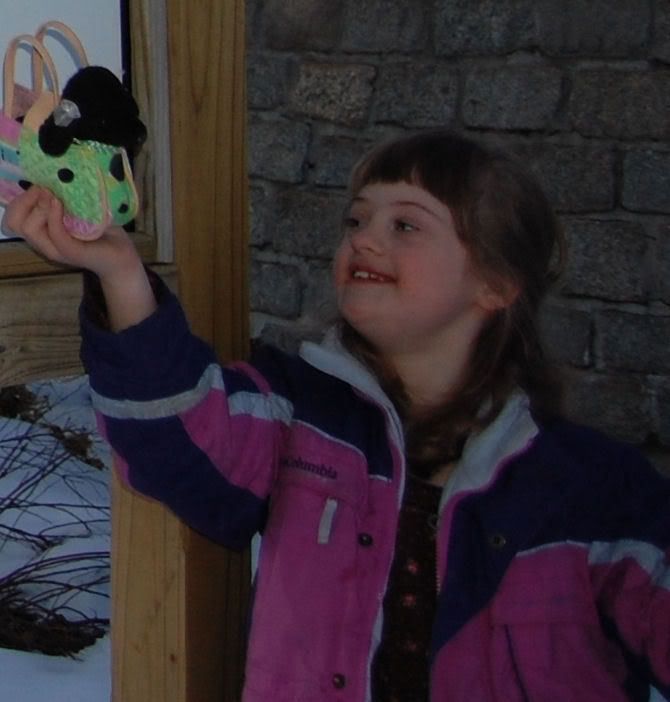
Ciarra and I played hostess to GiGi the Travelling Poodle for a month or so recently. (IT was supposed to be MUCH shorter a visit, but we were dealing with sickies, so GiGi's owners let her stay awhile.)

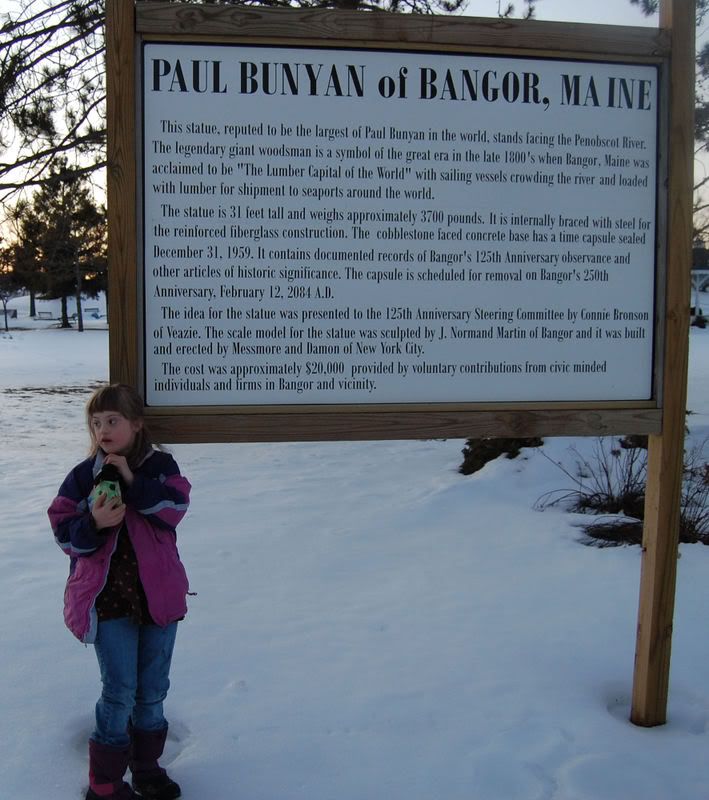
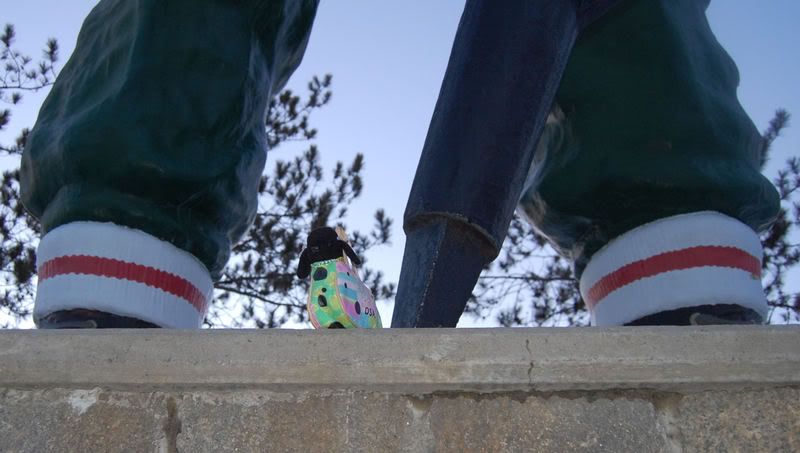
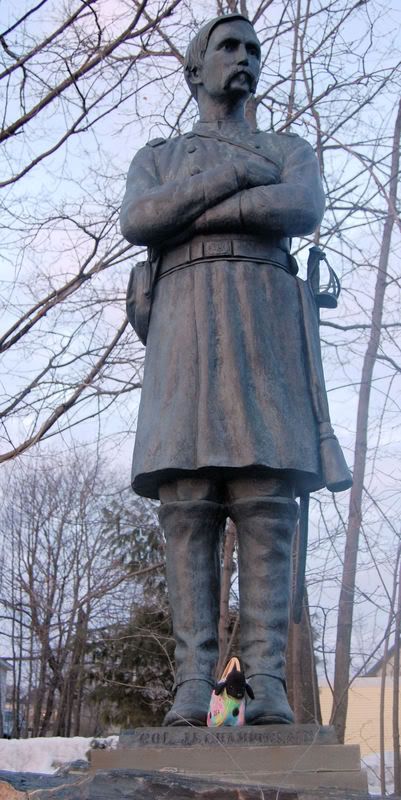
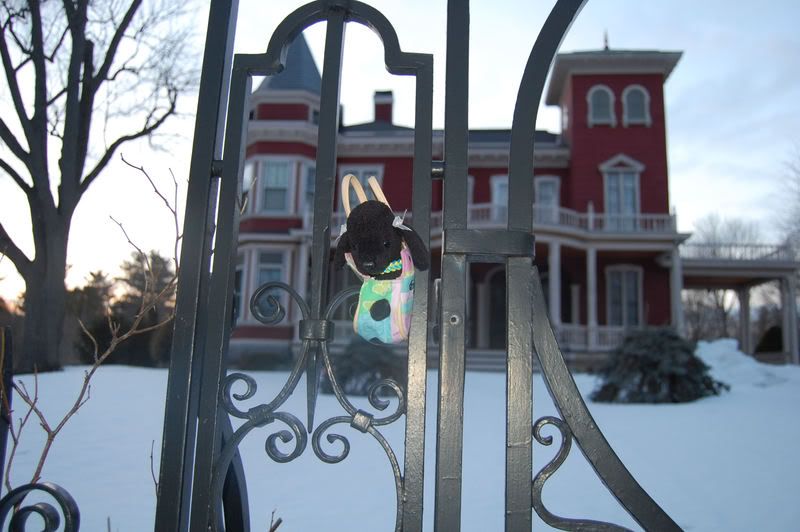
We went bowling, visited Paul Bunyan, tubing at Hermon Mountain ski area, visited Joshua Chamberlain (Civil War hero), took GiGi to Pajama Day with Ciarra's class, and went to Stephen King's house. (he wasnt home.)

GiGi is the brainchild of a beautiful family we know through another DS board we frequent. McKenna is GiGi's "Mom" and Darah is her beautiful inspiration. It has been a pleasure to be a part of GiGi's travels to bring awareness of Down syndrome to the world, one family at a time. We hope GiGi stays warm on her next visit to a precious little boy named Austin, and on all of her journeys to come.


Tuesday, April 08, 2008

My review: Road Map To Holland


In the world of Down syndrome, there are many people who are beautiful writers, great thinkers, or tremendous advocates for our children. I have had the good fortune to have become friends over the last few years to a lady who manages to have all of the above attributes and then some. Passionate, engaging, funny, brilliantly in-tune with her children and her world, Jennifer Graf Groneberg has fast become a force to be reckoned with.

There are many books written on the subject of Down syndrome, myriad collections on the health effects of triplicate chromosomes, the effect on siblings, the education and care of the children themselves, even philosophical tomes that try to educate the masses on just why it is that children "like that" should never be born at all. But sparse few that dare to explain what it really feels like to be thrust into the world of Down syndrome with no idea whatsoever of what to do or where to turn.

Road Map to Holland (NAL/Penguin) helps answer those questions. I was lucky enough to have some "insider help" (thanks Jennifer!) getting a copy, and read it cover to cover and back again in less than 4 hours.

I must say, for the record, that I was quite excited to read this book, having seen some of the story unfold in real life and knowing Jennifer to be an eloquent and loving writer. I had always read her contributions to our shared Down syndrome board excitedly. She has a passion for our kids that leaps off the page, and like me, an overwhelming desire to help new parents find their way. So my disclaimer is this: I am prejudiced towards liking just about anything she writes, and may well have gushed over the book regardless of it's quality, simply because I adore her and her family. But that is not what happened.

This book was an engaging, emotional, familiar journey for me. My own child with DS is almost 10 years old now, and her life has been a joyful noisy experience. For the most part, I think I am "there" in terms of acceptance. I love this child so fully, I cannot imagine changing her or taking away the Down syndrome. Oftentimes, when I read a book by a "new" parent, I find myself nodding knowingly, happy that they have discovered something that is old hat to me. I feel like I have been through it, and I rarely find myself emotionally invested. I am happy for them, they made it, they survived and found the brilliant light on the other end. Like me. But this book left me sobbing, it pulled me back so many times that Jennifer might as well have been writing MY story. I was not just "the older kid's mom", I was that mom with the emotions pouring out of me, the gut-wrenching recognition of a different future, the mother of a baby in the NICU fighting for life, the guilt-ridden risk taker who should have known not to gamble on another child.

Jennifer is all of those women, she is every part of me as I went through this journey. She thinks like I think, feels like I feel, and gauges the world as I do, in terms of kindness.

She opens her eyes, reaches into the basket, and pulls out a bottle. She asks if she can touch me, and again, I say yes. She dabs some of the liquid from the bottle on her index finger, then taps each of my earlobes. I'm enveloped in fragrance-the white lilacs blooming in the moonlight. The heady peonies. Sun-dried cotton pillowcases. My grandmother's kitchen in the mornings.
"What is it?" I ask.
"Forgiveness," She says.
It is the one, perfect word. I crack. tears flow out of me like a river flowing to the ocean. I have so much guilt.I was too old to have a baby. Or it's deeper within me, a rotten core of bad genes that Avery has to pay for. My selfishness, my doubt. It all comes pouring out.
"I was so afraid," I say.


I thought I was more "there" than I was. Reading this book showed me that there still are some little wounds that need tending, some forgiveness that needs to be given. In her words I recognize how hard I have been on myself. If I can forgive her her worries and fears, well then I can forgive mine, too.

As I tell her my story, I can feel the sadness lift from my body, replaced by a newborn tenderness. It is forgiveness, for Avery and for me.

A few days ago, I received a beautiful short email from Jennifer. She said:

You have been an inspiration to me, and I can't say it enough: your posts at Downsyn.com helped me envision a life for Avery. A life of hope, and of possibility. And it was Ciarra's eyes that made me see this: literally! Her eyes are the most beautiful I have ever seen and I remember thinking, Wow. There's nothing but beauty here, she's stunning. And then I could see Avery that way, too. And now I see all our kids that way, and I really want to thank you. For helping me find the way "home."

xoxoxoxo


Jennifer's book has shown me what it is besides the love of my family and closest friends, besides the love of this amazing child, that saved me. What saved me was the fact that I have had the privilege of telling my story to new moms over the years. I have been blessed with a child who's story has shone a little light on the Roadmap to Holland as it was written, and to have that light reflected back at me gently and lovingly by this tenderhearted and precious author.

Even if she wasn't my friend, even if I didn't think she hung the moon, I would highly recommend this book. For any parent that has grown up spiritually and emotionally as a result of raising their children, and especially for any parent handed a baby in one hand and a genetic diagnosis in the other, it is a Godsend. The Road Map leads to buried treasure. You find it when you least expect it, and it changes your life forever.

"That's the sign I want to use to tell Sarah what it's like being Avery's mom. Big love, big joy. Let go. Hug yourself and swing your body and smile and expect that the world will receive you just as you are, and it will. It will because you make it so, with all your heart and your whole body, smiling, swaying back and forth so fast and pure that the surety of it makes you dizzy."

Jennifer, thank you. I am truly honored.

Amazon.com's listing for Road Map to Holland

Saturday, March 01, 2008

where Down Syndrome starts and ends

I am a member of more than a few Down syndrome specific sites. I routinely attend the yearly DS Conferences. I know a fair bit about statistics, different kinds of DS, health issues specific to "our kids", etc. In fact, it is rare a day goes by that I dont find myself speaking or typing the words "down syndrome". And yet, DS is such a minor part of who my daughter is in my thinking. I rarely look at her and think "oh, that is because of DS". I dont equate her successes and failures with the number of chromosomes she packs. Even so, I am aware of her genetic makeup deep in my bones, it is there even when it is not in the forefront of my thoughts.

Somehow, I have been able to raise her to be a young lady who happens to be really cute, funny, charming, a bit moody, a third grader, a great reader, a pretty good baseball player, an aspiring artist...who happens to have a little something extra in her genes. In a weird way, DS is everything, and DS is nothing. It colors most of my thinking about her and her future, and still manages to be at the end of a long line of things I think about when I think about her.

It is almost as though the DS is the last hurdle we jump in all cases of trying to give her the life of a normal little girl. Usually, it is along the lines of "How can we make a world that has her pegged as 'that Down syndrome kid' see who she really is. We think about the future, and the many ways she breaks the mold. She is not a superstar, I dont think. She talks fairly well, she is academically holding her own. But she is just a kid, just a kid with DS. As every other kid in the world, some will do more and better things, and some will do fewer. She is not that different than any other kid, making her way. Except that there are some ways that DS does impact her, whether they are physical or cognitive things, or barriers thrown up by the world. And except for the fact that when we sign her up for various things, there is the requisite "oh, by the way...she has Down syndrome". And there is the inevitable long, searching look, as whoever has just received that news gathers their response. Most of the time, it is a positive response, and questions come quickly about how they can make things smoother for her, what accomodations she will need. Every once in awhile, you get a reaction that tells you this might not be a great idea.

People are either very willing to tackle it or they arent. I am not naive enough to believe that having Ciarra on a team or in a group poses no unique challenges. I am fully aware, for instance, that she is generally smaller and less strong. She is not ever going to be the hardest hitter or the fastest runner. There are times I bargain with myself, remembering the big hit she got last year in baseball, the rush of emotion when her teammates came outside the dugout to give her five, in a line of acceptance and respect that seemed improbablte for their ages. Here is that video, in case you missed it.


The time is coming fast for us that we must again find a way to make the DS take a backseat to the little girl growing up in our home. Ciarra is approaching puberty...and fast. Once again, who she is, and how she is impacted by DS comes to the forefront. Do we approach this as we would any other little girl? We have had some of "the talk". She understands at an age (and development) appropriate level. And yet, emotionally, she is so young still. One of the incongruities of DS is that physical age and mental age and emotional age are all so varied. Academically, Ciarra is kicking butt. She is doing wonderful things. Mentally, she is very self-sufficient and capable. Developmentally, emotionally...she is young. Naive, innocent, guileless, trusting, unsuspecting, even un-sophisticated. Maybe every other word in the thesaurus there is about being completely too young and unprepared for this momentous undertaking. She is just a baby, I want to scream. God allows her to have the mind of innocense in so many ways, she does not yet even lie. And she will have to deal with having a period, changing pads, wearing a bra all the time. It seems unfair. And too, it seems that I want it both ways. Either she is a typical little kid and therefore she has to accept it all, the good and the bad, of life, or she is not. She is. I dont give her easy outs. I dont allow her to take the easy road. I push her to be her best, and here I am trying to find some way to let her out of this entryway to womanhood. Woman? She is only 9. :(

I guess the truth is that I am scared. Will I have what it takes to teach her to take care of herself, but even more to love herself, as she becomes a woman? Will she hate having her period (I do!) Will she understand all of the emotions and physical effects she faces? will she be moody and cry easily? Where does DS start and end? How does it affect her as she matures? The truth is, facing puberty in my daughter with Down syndrome means I have to face the biggie, the one issue that has ever made me cry. How do I explain to this darling little girl that having your period means your body is trying to make way for a baby...when having a baby and having DS are incongruent at best? The one thing I have ever cried over is that she likely will not have babies. Should she? Will she? She is old enough now that she has me trained. I dont get to decide. She is in charge. But Down syndrome is clearly a big part of the equation.

Kids with Ds stand a much higher chance of being sexually abused, especially those who are mildly affected. There is the issue of sexuality. There are so many questions...are boys with Ds really sterile? Should we be steering her towards loving those with DS, "those like her"? My heart, and my gut scream no. She gets to choose. Ds doesnt win this round. And yet..there it is. If she did have a baby, the chances of her having a baby who also has DS are 35-50%. Is that fair? is there anything wrong with having a baby with DS? Is that in itself making a judgement on her? I wonder if I had a crystal ball, would I use it? Or would I allow life to unfold in all of its beauty and tragedy and allow the details to reveal themselves to me in the time and place God intends? Sometimes, I just want to know. Will all of this work out? Will scientists find a way to ameliorate the effects of DS on our children's brains, and let them live more normal lives and make these decisions without all of our handwringing and worry? If the magic pill came tomorrow, would she have had enough real world experiences to live a life of "normal" and not be destroyed by it? do I even want her to be anything but the unique and precious little person she is?

You see, puberty brings so many questions. And Down syndrome is a part of most of the answers. Like it or not, there is no removing it from the picture. She can be as normal a kid as she is, living her normal little life in her normal little world, and then there it is...looming. Down syndrome. How will it affect this time in her life? How will she be affected as a woman, when the time comes to decide about children? will I ever be strong enough to say to this darling and loving child..."Honey, maybe you shouldnt have a baby..."? If the answer is that I HAVE to, then why should either of us have to be drug through this playacting of the mundane, this tease of normalcy, this promise of the future that probably will never be? Just for today, I want to scream out loud..."Down syndrome isnt fair, God."


Q. Do girls with Down syndrome have normal menstrual periods?

A. Menstruation for girls with Down syndrome is no different than for their peers in the general population. On the average, they begin menstruating at age 12 1/2, but may begin as early as age 10 or as late as age 14. Most girls with Down syndrome have regular cycles with the same minor irregularities typical of their peer group.

Alterations in a previously regular cycle may be due to the normal process of aging, or may be a sign of emerging hyperthyroidism. Ongoing irregularity of menstrual cycle warrants medical examination.

The Tanner stages (also known as the Tanner scale) are stages of physical development in children, adolescents and adults. The stages define physical measurements of development based on external primary and secondary sex characteristics, such as the size of the breasts, genitalia, and development of pubic hair.

Due to natural variation, individuals pass through the Tanner stages at different rates, depending in particular on the timing of puberty.

In HIV treatment, Tanner staging is used to determine which treatment regimen to follow (adult, adolescent, or pediatric).

The Tanner stages were first identified by James Mourilyan Tanner and thus bear his name.


Definitions of stages
Adapted from text by Lawrence Neinstein, MD.[1]


Pubic hair (both male and female)
Tanner I
no pubic hair at all (prepubertal state) [typically age 10 and under]
Tanner II
small amount of long, downy hair with slight pigmentation at the base of the penis and scrotum (males) or on the labia majora (females) [10–11]
Tanner III
hair becomes more coarse and curly, and begins to extend laterally [12–14]
Tanner IV
adult-like hair quality, extending across pubis but sparing medial thighs [13–15]
Tanner V
hair extends to medial surface of the thighs [16+]

Genitals (male)
Tanner I
prepubertal (testicular volume less than 1.5 ml; small penis of 3 cm or less)
Tanner II
testicular volume between 1.6 and 6 ml; skin on scrotum thins, reddens and enlarges; penis length unchanged
Tanner III
testicular volume between 6 and 12 ml; scrotum enlarges further; penis begins to lengthen to about 6 cm
Tanner IV
testicular volume between 12 and 20 ml; scrotum enlarges further and darkens; penis increases in length to 10 cm and circumference
Tanner V
testicular volume greater than 20 ml; adult scrotum and penis of 15 cm in length

Breasts (female)
Tanner I
no glandular tissue; areola follows the skin contours of the chest (prepubertal)
Tanner II
breast bud forms, with small area of surrounding glandular tissue; areola begins to widen
Tanner III
breast begins to become more elevated, and extends beyond the borders of the areola, which continues to widen but remains in contour with surrounding breast
Tanner IV
increased breast size and elevation; areola and papilla form a secondary mound projecting from the contour of the surrounding breast
Tanner V
breast reaches final adult size; areola returns to contour of the surrounding breast, with a projecting central papilla.

Friday, May 18, 2007

"Easier to cherish than to describe"

http://www.mercatornet.com/articles/saintly_scientists_hate_the_disease_love_the_diseased/

Jerome Lejeune is being considered for Sainthood. As a mom of a child with Down syndrome, I have known about him forever. But I never knew enough, and I am humbled and deeply moved by what I have learned today.

Lejeune's scientific and spiritual fame centres on his 40-year commitment to finding a cure for Down's syndrome (for pedantic reasons now known as "Down syndrome" in North America and elsewhere). At the very beginning of his medical career in the 1950s he found himself drawn to the young, mentally handicapped children, so often segregated in institutions and denied treatment which could have relieved associated health problems. He also felt deeply for the parents who learned that they had given birth to a "Mongol" child ("Mongolian idiocy" was the cruel technical term for the condition) and who fell under suspicion of breeding racial degeneracy. In earlier decades Down's sufferers had been targets of the eugenics movement.

Fellow feeling for these innocent outcasts turned the young Parisian doctor into a research scientist, his mind and heart set on solving the mystery of their condition and relieving their suffering. He would not accept that his profession could turn its back on one whole group of people.


He lived to see the day that the medical community would turn it's back. His humanity was most evident in his words about our children.

"With their slightly slanting eyes, their little nose in a round face and their unfinished features, trisomic children are more child-like than other children. All children have short hands and short fingers; theirs are shorter. Their entire anatomy is more rounded, without any asperities or stiffness. Their ligaments, their muscles, are so supple that it adds a tender languor to their way of being. And this sweetness extends to their character: they are communicative and affectionate, they have a special charm which is easier to cherish than to describe. This is not to say that Trisomy 21 is a desirable condition. It is an implacable disease which deprives the child of that most precious gift handed down to us through genetic heredity: the full power of rational thought. This combination of a tragic chromosomic error and a naturally endearing nature, immediately shows what medicine is all about: hatred of disease and love of the diseased."


How could we go from this to where we are now? How can we in the DS community NOT follow his lead and fight loudly and publicly for our children?

"The patients are waiting for me, I have to find the answer."


However, although he laboured to the last weeks of his life -- exploring the use of folate therapy, for example -- he died in April 1994 without achieving his mission, and feeling that he was "abandoning them".


When my daughter was born almost 9 years ago with DS, I began to see the truth of prenatal diagnosis around me. So many babies were dying. So many families were being told that this blessing was a curse. I was shushed and blacklisted for screaming this from every rooftop, DS support sites did not want this dark discussion brought to light. It was not a good conversation piece, it would scare new parents. I learned to be quiet or risk banning everywhere I went. It is with some pride that I WAS banned by several sites who not only gave newly pregnant moms advice on how and when to abort, but almost pushed them over the edge with one-sided advice on the value of our children's lives. If anyone doubts that the culture of death is alive and well, I would implore you to do a search on "prenatal testing bulletin board termination for medical reasons". It is astonishing how far we have come. In a way, I am almost glad the good Doctor didn't live to see this day. In the 90's the abortion rate was near 90%. What do you suppose it is today?

My child is almost 9 now. There are fewer and fewer of her peers in the world with DS. Someday, we will come to the awful realization that we did not speak up soon enough. It is comforting to know that Dr. LeJeune started speaking up LONG before I did. It is affirming to know that my own little voice mirrors his. It is sad to know that his voice is still now, when we need it more than ever.

In our race to find the perfect child, we are throwing away the 2nd best gift God ever gave us. Having a child with DS teaches you about what really matters in the world. I am sad for the world, that they will never know until it is too late, what they have so easily discarded. In my mind, I can see the hundreds of thousands of broken little bodies as they cross through Heaven's Gate, running into his outstretched arms, accepted and loved for who they are. Finally.