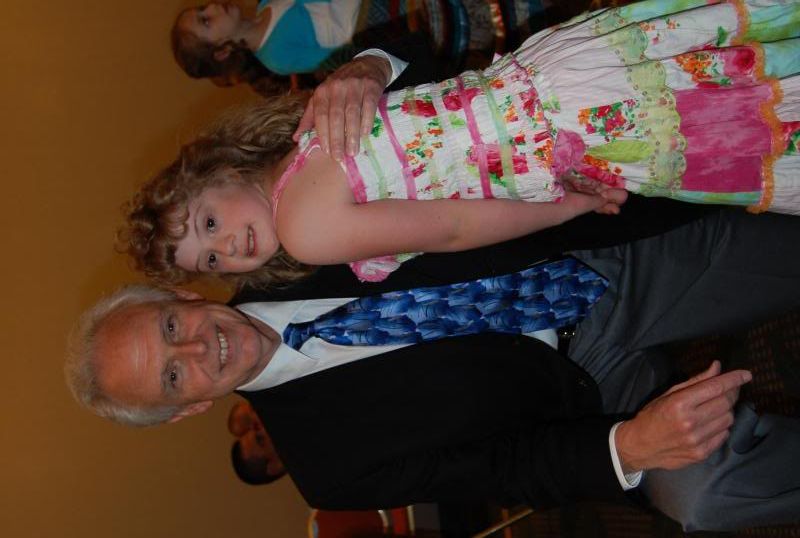
Ciarra has now been taking GB (2.5 mg per pound) for about 5-6 months on a regular basis. Since she learned to swallow pills, it has been a daily thing.
In June, she had NWEA testing, state testing to measure her ability. She did "ok", but was obviously not completely on track academic wise. SHe has been staying close, but slightly behind, her peers for a year or so now. In some areas, she is very much on track, in others, such as math, she has to work her cute little butt off to be in range.
In September, she was retested on the NWEAs. She jumped 40 points in math! 4 months had elapsed, 4 months of summer, no summer school. Basically vegging, the park, hanging out with mom and a babysitter while mom works.
So what is the difference? What caused that big a jump in scores? Well, either one or the other test was flawed, or something is going on here. She has been back in school about a month and a half now. One after another after another, people approach me to tell me that there is something going on here.
"She has more depth to her language."
"She GETS it!"
"What is going on, she seems like a different person?"
"I cant put my finger on it, but Ciarra has matured in huge ways..."
Yeah. Something is definitely going on here.
I wont say 100% it is the GB. But you know what? This doubting Thomas is starting to believe it.
ETA:
A friend asked about the Ginkgo Biloba, what I knew about it. So I'm guessing others may be curious, too. Here is what I sent to her:
Hi Cindy, I have done SO much research on Ginkgo. The active ingredient in it is Bilobalide. Have you seen the studies done this summer at Stanford? Craig Garner is one of the lead researchers, and he and I have talked at length. Safety was my biggest concern, and so I researched for almost a year before we decided to go for it. Craig's study was the deciding factor. This is gonna be a LONG email, so bear with me, k? The youngest kids I know taking it right now are about 2, maybe slightly younger. PLEASE talk to your doc. Now Foods is a good brand, nowfoods.com can tell you where you can buy it locally. Good luck!
PS this site (I really dislike the name) explains GB in VERY English terms.
http://www.curingdownsyndrome.com/index_files/Page342.htm
Warnings, Interactions, Adverse Effects
During the past 20 years, an estimated 2 billion daily doses (120 mg) of ginkgo have been sold. The most important potential clinical problem with ginkgo is caused by its inhibition of the platelet-activating factor; this makes the use of ginkgo in conjunction with warfarin (Coumadin), aspirin, or other antiplatelet agents a matter of clinical judgment. A recent safety study37 of the interaction of ginkgo and warfarin showed no change in the international normalized ratio. Ginkgo should be discontinued between 36 hours and 14 days before surgery, based on either pharmacokinetics or consensus opinion.38,39
ME: (GB can make blood flow faster, so you have to monitor for injuries or be extra careful prior to surgery. ALWAYS talk to your doc before you start GB)
Herbal medications that may increase the risk of bleeding if used concurrently with ginkgo include the following: feverfew, garlic, ginseng, dong quai, red clover, and other natural coumarins. Several case reports of bleeding complications associated with ginkgo use include subdural hematoma,40,41 subarachnoid hemorrhage,42 intracerebral hemorrhage,43 and hyphema44; the causality of these events has not been established. One case report45 discussed an elderly patient who developed elevated blood pressure while taking a thiazide diuretic and ginkgo. The patient's blood pressure returned to normal when both substances were discontinued. This reaction is paradoxical in light of the known pharmacologic actions of these agents.45
ME: (To date, NONE of the 50 plus families who have tried it have seen a single bleeding issue.)
The unprocessed ginkgo leaf contains ginkgolic acids that are toxic. Hypersensitivity to ginkgo preparations is a contraindication to use. Ginkgo is generally well tolerated, with side effects being rare, usually mild, and including nausea, vomiting, diarrhea, headaches, dizziness, palpitations, restlessness, weakness, or skin rashes. Although no studies have been performed to support any restrictions on the use of ginkgo during pregnancy or lactation, it seems prudent not to administer ginkgo in the absence of any data.1,2
ME: (I researched, called, emailed EVERY company whose product I tried. I did not settle on any of them until they told me in human terms EXACTLY how much ginkolic acid was in their particular product. If they cat tell you or say they dont know, do NOT use that product. GOOD ingredients and their amounts should be looked for: 24% ginkgo flavone glycosides and 6% terpene lactones)
Nutrivene puts out a brand specifically made for kids with DS, I believe they send free samples too:
http://nutrivene.com/view_item.php?ProductID=167&
Dosage
For patients who have memory problems and dementia, the dosage of ginkgo is 120 to 240 mg daily, taken in two to three doses. The dosage for patients who have tinnitus and peripheral vascular disease is no more than 160 mg per day, taken in two or three doses. An initial period of six to 12 weeks is recommended to assess the effectiveness of ginkgo, although results have been seen as early as four weeks.13,46,47 The monthly cost for the usual daily dose of 120 mg is approximately $15 to $20.
ME: (the suggested dosage for kids with DS is 2.5 mg per pound of body weight. My understanding is it isnt a great idea to exceed 240 mg, although Ciarra is still quite small and only gets 180 mg daily now. We give it to her at bedtime, one 120 mg capsule, and one 60 mg one. We tried Liquid GB, YUCK. Mixing it with orange juice helps, or a VERY strong koolaid concoction. Grape, the pharmaceutical companies tell me, is the best taste to mask it. )
www.aafp.org/afp/20030901/923.html
GB in the news:
WASHINGTON (Reuters) - An old drug once used to study epilepsy can help improve learning in mice with a form of Down syndrome and also might help people, U.S. researchers said on Sunday.
The beneficial effects the drug, called pentylenetetrazole, or PTZ, continued for two weeks after treatment. This suggests the drug, like some other psychiatric drugs, can make long-term changes in the brain.
The finding, published in the journal Nature Neuroscience, also can help scientists understand what causes the mental retardation seen in Down syndrome patients.
"This treatment has remarkable potential," said Craig Garner, a professor of psychiatry and a director of the Down Syndrome Research Center at California's Stanford University.
"So many other drugs have been tried that had no effect at all," Garner said in a statement. "Our findings clearly open a new avenue for considering how cognitive dysfunction in individuals with Down syndrome might be treated."
Down syndrome is the most frequent genetic cause of mental retardation and occurs equally around the world, in about one in every 800 births. About 5,000 children born in the United States each year have Down syndrome.
It is caused by the presence of a third chromosome, known as chromosome 21. Most people have two copies of each chromosome and the additional activity of the genes on the third copy of chromosome 21 is believed to cause the symptoms of Down syndrome.
Symptoms range from moderate mental retardation to very mild disability. Many Down's patients also have health problems, especially heart trouble.
Fabian Fernandez, a student in Garner's lab, was exploring the possibility that the brains of Down's patients are too strongly affected by a chemical called GABA, a neurotransmitter, or message-carrying chemical, that stops brain cells from becoming too excited.
DAMPING DOWN LEARNING
"In general, learning involves neuronal excitation in certain parts of the brain," Garner said. "For example, caffeine, which is a stimulant, can make us more attentive and aware, and enhance learning."
Inhibiting this process can interfere with learning.
PTZ does this by causing more GABA to be available in the brain. Overdoing this process can cause seizures and PTZ was once used to study epilepsy. But it is no longer approved for use in people.
Fernandez gave daily doses of PTZ to mice specially bred to have many of the same genetic differences that cause Down syndrome.
"My idea was that it might be possible to harness this excitation effect ... to benefit people with Down syndrome," Fernandez said.
He gave the drug to the mice and then gave them a maze test. Normal mice tend to explore first one arm of a T-shaped maze and then the other, while the Down mice are more random in their exploration.
But after 17 days of treatment, the drug made the Down mice explore and learn more like normal mice.
"Somehow the drug treatment creates a new capacity for learning," Garner said.
More tests showed that daily doses were required for several days before any effect was seen, and the mice acted more normally for up to two months after the drug was stopped.
That may suggest the drug is changing brain structure, Garner said. His team may explore testing the drug or a similar compound in people as a possible treatment for Down syndrome.
www.newscientist.com/arti...alth_rss20
Ginkgo could aid memory formation
03 March 2007
From New Scientist Print Edition. Subscribe and get 4 free issues.
Tools
MEMORY could be boosted in people with Down's syndrome using a ginkgo tree extract.
People with Down's syndrome often find it difficult to remember facts and events. This could be because neurons in the hippocampus - an important area of the brain for memory formation - are overinhibited by a neurotransmitter called GABA.
The ginkgo extract, called bilobalide, and another drug called pentylenetetrazole (PTZ), both block GABA. In a mouse model of Down's syndrome, mice that drank PTZ in chocolate milk, or received an injection of bilobalide, once a day for 17 days did significantly better at memory tests, such as recognising which of two objects they had not seen before. The improvements lasted for up to three months after the mice stopped taking the drugs, suggesting that they had caused long-term changes in brain activity (Nature Neuroscience, DOI: 10.1038/nn1860).
"With time you're teaching the brain to suppress the excessive inhibition in the hippocampus," says Craig Garner of Stanford University in California, who led the study. He says PTZ has the most immediate potential because it has already been rigorously tested in humans and can be taken orally.
From issue 2593 of New Scientist magazine, 03 March 2007, page 17
this one is interesting but a bit pessimistic:
In a study that could hold promise for children with Down Syndrome, Stanford University researchers have found that a long-discredited drug can improve the mental abilities of mice with the genetic disorder, which causes mental retardation in humans.
The mice were better able to navigate mazes and recognize new objects after receiving the drug, and the gains continued for months after treatment stopped. The researchers ultimately hope to test the drug, known as pentylenetetrazole, or PTZ, in people with Down syndrome.
"It's a very exciting piece of work," said David Patterson, a Down syndrome researcher at the University of Denver who was not involved in the study. "This is really the first time that I've seen such a striking effect in terms of reversing the memory and learning difficulties the mice have."
Both Patterson and the Stanford researchers caution, however, that the research is preliminary and it is too early to tell if the drug will be successful in people. Although PTZ was once used as a heart stimulant, it was taken off the market and now is used only in research. The process of doing further tests and getting government approval to use it as a Down syndrome treatment could take more than a decade.
Quality of Life Improvement?
A genetic disorder caused by an extra copy of the 21st chromosome, Down syndrome occurs in one of every 733 live births. More than 350,000 Americans have the condition, according to the National Down Syndrome Society. The disorder typically causes mild to moderate mental retardation and can increase the risk for Alzheimer's disease, leukemia and congenital heart defects.
Because people with Down syndrome are now living much longer, with a typical life expectancy of 56 years, researchers increasingly are studying ways to improve their quality of life. Some studies have examined whether Alzheimer's drugs could improve their mental abilities, with little success, said Craig Garner, codirector of Stanford's Down Syndrome Research Center and one of the authors of the new study.
In the study, published online Sunday by the journal Nature Neuroscience, mice genetically engineered to display the symptoms of Down Syndrome were fed 17 daily doses of milk containing PTZ. After treatment, they performed as well as "normal" mice in running mazes and recognizing objects for up to two months.
It took some time for the drug to work -- an effect seen with many psychiatric drugs, including antidepressants. The mice also received two other compounds similar to PTZ, which worked about as well. The "normal" mice did not see any cognitive benefit from the compounds.
Releases the Brakes
Stanford researchers believe that PTZ and the other compounds may work because they block a neurotransmitter that slows brain function. That neurotransmitter is believed to work too well in Down syndrome patients, hampering learning and memory.
Garner said these compounds help "release the brakes" on chemical impulses in the brain that drive cognition. "If you drive the car with the brake on, you don't get anywhere," he said.
The Stanford researchers want to continue studying PTZ, rather than the other compounds used in the study, because it was once approved for use in humans.
The drug pentylenetetrazole was used as a heart stimulant and has been used experimentally to study seizures. When used in high doses, it can cause convulsions. The U.S. Food and Drug Administration removed the drug from the market in 1982 because it was not effective in treating disease and could be harmful, Garner said. However, Garner believes the drug can be safely used in very small doses.
"We think we're slowly being able to understand what's causing reduced cognitive ability in people with Down syndrome," he said, and there are new approaches and strategies that could improve their quality of life. Still, he added, "This is not a cure. We're not making a kid with Down syndrome normal. There are limits to what medicine can do.
-------------------
Drug shows promise for Down syndrome
LOS ANGELES, Feb. 26 (UPI) -- Researchers at California's Stanford University report a drug known as PTZ can improve the learning and memory of lab mice with Down syndrome.
After receiving once-daily doses of PTZ, or pentylenetetrazole, researchers found the Down syndrome mice could recognize objects and navigate mazes as well as normal mice, The Los Angeles Times reported.
The improvements lasted up to two months after the drug was discontinued according to a report by the researchers in the journal Nature Neuroscience.
Lead author Craig C. Garner, a professor at the Stanford School of Medicine, told the Times that after more preliminary studies his lab will prepare for conducting human trials.
Down syndrome is the leading cause of mental retardation. It results from an extra copy of chromosome 21.
--------------------------
and Craig's entire scientific report, with his permission
Published online: 25 February 2007; | doi:10.1038/nn1860
Pharmacotherapy for cognitive impairment in a mouse model of Down syndrome
Fabian Fernandez, Wade Morishita, Elizabeth Zuniga, James Nguyen, Martina Blank, Robert C Malenka & Craig C Garner
Department of Psychiatry and Behavioral Sciences, Nancy Pritzker Laboratory, Stanford University, Palo Alto, California 94304-5485, USA.
Correspondence should be addressed to Craig C Garner cgarner@stanford.edu
Ts65Dn mice, a model for Down syndrome, have excessive inhibition in the dentate gyrus, a condition that could compromise synaptic plasticity and mnemonic processing. We show that chronic systemic treatment of these mice with GABAA antagonists at non-epileptic doses causes a persistent post-drug recovery of cognition and long-term potentiation. These results suggest that over-inhibition contributes to intellectual disabilities associated with Down syndrome and that GABAA antagonists may be useful therapeutic agents for this disorder.
Ts65Dn mice, like patients with Down syndrome, show comprehensive deficits in declarative learning and memory1. Previous research suggests that these cognitive deficits are not due to gross abnormalities in Ts65Dn neuroanatomy2, but rather derive from selective decreases in the number of excitatory synapses in the brain3 and corresponding changes in synaptic connectivity4, 5. These findings are supported by in vitro studies showing that synapses in the Ts65Dn hippocampus can express normal long-term potentiation (LTP), but that excessive GABA-mediated inhibition impairs its induction6, 7. Assuming that triplicated genes found in Ts65Dn mice shift the optimal balance of excitation and inhibition in the dentate gyrus (and perhaps other brain regions) to a state in which excessive inhibition obscures otherwise normal learning and memory, we theorized that subtly reducing the inhibitory load in the Ts65Dn brain with GABAA receptor antagonists might rescue defective cognition.
After establishing that the pattern of cognitive impairments in Ts65Dn mice (3–4 months of age) matched those observed in children and young adults with Down syndrome (Supplementary Fig. 1 online)8, we then assessed whether a non-epileptic dose of the noncompetitive GABAA antagonist picrotoxin (PTX; intraperitoneal (i.p.), 1.0 mg per kg body weight, a dose used extensively in classic rodent studies on memory consolidation)9 could improve Ts65Dn object recognition memory. Although pilot studies indicated that a single dose, 1 d before testing, did not rescue Ts65Dn object recognition performance, a chronic 2-week daily regimen had clear beneficial effects (Supplementary Fig. 2 online). We therefore initiated a 4-week longitudinal crossover study. Here, wild-type and Ts65Dn mice (3–4 months of age) were randomly assigned to groups receiving daily i.p. injections of saline or PTX (1.0 mg kg-1), and were submitted to four weekly repetitions of object recognition testing, in which the animals were serially presented with four different object sets. At the 2-week midpoint of this experimental period, wild-type and Ts65Dn mice that had been receiving saline were randomly segregated into groups that either continued to receive daily saline injections or began daily injections of PTX. Conversely, wild-type and Ts65Dn mice that had been chronically administered PTX in the first 2 weeks of testing were now switched onto a saline regimen. Alongside saline and PTX, we also evaluated the efficacy of bilobalide (BB; i.p., 5.0 mg kg-1)10, a PTX-like compound that could be safely administered for the whole 4-week experimental period.
Not surprisingly, Ts65Dn mice injected with saline during the first 2-week period of novel object recognition testing, or those receiving saline over the course of the whole experimental period, did not show novelty discriminations significantly above chance (DI > 0; t16 = 0.8169, P > 0.4260, and t40 = 1.524, P > 0.13, respectively; Fig. 1). In marked contrast, Ts65Dn mice treated with PTX during the first or second 2 weeks showed normalized object recognition performance, as did those that received BB throughout the study (Fig. 1). Moreover, unexpectedly, Ts65Dn mice that had undergone chronic PTX administration during the first 2-week period of novel object recognition testing maintained their improved performance when evaluated 1 and 2 weeks later (Fig. 1 and Supplementary Table 1 online). Notably, wild-type and Ts65Dn mice did not differ in total object exploration time, invariably spending 25% of their experimental sessions investigating objects (Supplementary Table 2 online).
Figure 1. PTX and BB rescue Ts65Dn performance in the novel object recognition task.
Shown are DIs of wild-type and Ts65Dn mice involved in a 4-week crossover study. (a) In the first 2 weeks, untreated and saline-treated Ts65Dn mice did not show a preference for novel objects (DI > 0; t17 = 0.7737, P > 0.4497, and t16 = 0.8169, P > 0.4260, respectively), whereas PTX- and BB-treated Ts65Dn mice discriminated object novelty (t9 = 4.083, P < 0.003; and t15 = 4.390, P < 0.001). (b) Saline-treated Ts65Dn mice given PTX during the second period of object recognition testing (Sal PTX) started out with the same deficits as those continuing to receive saline (Sal Sal), suggesting that there was no sampling bias for animals in later treatment groups. (c) During the second 2 weeks, saline-treated Ts65Dn mice switched to PTX discriminated novel objects similarly to wild-type (WT) mice (t8 = 3.756, P < 0.006). PTX-treated Ts65Dn mice switched to saline in the second 2 weeks also maintained their ability to discriminate novel objects (t6 = 3.250, P < 0.02), suggesting a persistent change in brain function had occurred. (d) Compilation of WT and Ts65Dn mouse novelty DIs with no treatment or treatment with saline, PTX or BB, showing that PTX and BB normalized Ts65Dn object recognition memory (F5,187 = 5.204, P < 0.0002; all post hoc comparisons with Ts65Dn control, P < 0.05; all other post hoc comparisons, P > 0.05). Control observations were pooled from untreated and saline-treated (PTX-naive) mice, and PTX observations from mice given PTX in either the first or second 2 weeks. DIs for each condition are tabulated and defined in Supplementary Table 1. Error bars, s.e.m. All experimental procedures were approved by the Stanford University Institutional Animal Care and Use Committee (IACUC) and conducted in compliance with the US National Institutes of Health Guide for the Care and Use of Laboratory Animals. See Supplementary Methods online for experimental details.
Full Figure and legend (38K)
To extend these findings, we next evaluated the effects of pentylenetetrazole (PTZ), a noncompetitive GABAA antagonist with a long history of medical use11, on declarative memory in the novel object recognition test and in a modified spontaneous alternation task. To mimic the most typical route of drug administration in humans, wild-type and Ts65Dn mice were administered PTZ (3.0 mg kg-1 in milk; a non-epileptic dose that can be safely given to rodents for up to 1 year)12 via voluntary oral feeding (see Supplementary Methods online). In total, wild-type and Ts65Dn mice received 17 daily doses of milk or a milk-PTZ cocktail and were subjected to two repetitions of novel object recognition testing, or to three daily T-maze sessions at the tail end of the treatment regimen (Fig. 2). In agreement with previous results, milk-fed Ts65Dn mice showed an inability to discriminate object novelty in the object recognition task. PTZ-treated Ts65Dn mice, by contrast, showed discrimination indices (DIs) on a par with those of wild-type mice (Fig. 2a and Supplementary Table 1). In the spontaneous alternation task, milk-fed Ts65Dn mice also showed a pattern of impairment similar to that of untreated Ts65Dn mice. However, mice receiving oral PTZ showed normal levels of alternation of 70%13 (Fig. 2c,d and Supplementary Table 3 online). Notably, wild-type and Ts65Dn mice and those on PTZ did not differ in object exploration time in the object recognition task and did not show arm biases in the spontaneous alternation task (Supplementary Tables 2 and 4 online).
Figure 2. PTZ elicits long-lasting cognitive improvement in Ts65Dn mice.
Novelty discrimination indices of wild-type (WT) and Ts65Dn mice directly (a) or 2 months (b) after an 2-week treatment with PTZ. (a) Although Ts65Dn mice on milk did not show a net novelty preference (t17 = 1.099, P > 0.2 , those receiving PTZ performed as well as WT mice receiving either milk or PTZ (F3,71 = 3.356, P < 0.03; all post hoc comparisons with Ts65Dn on milk, P < 0.05; all other post hoc comparisons, P > 0.05). (b) The normalized object recognition memory shown by Ts65Dn mice immediately after treatment was sustained 2 months later (F3,38 = 5.134, P < 0.005; all post hoc comparisons with Ts65Dn previously on milk, P < 0.05; all other post hoc comparisons, P > 0.05). Discrimination indices are tabulated in Supplementary Table 1. (c,d) Alternation scores (%) of WT and Ts65Dn mice across 3–6 sessions of testing in the spontaneous alternation task. In contrast to WT mice, which showed optimal alternation percentages (70%), untreated or milk-treated Ts65Dn mice showed significantly lower alternation percentages (t83 = 5.051, P < 0.0001). However, PTZ normalized Ts65Dn alternation scores to WT levels (F3,272 = 5.998, P < 0.0006; all post hoc comparisons with Ts65Dn control, P < 0.05; all other post hoc comparisons, P > 0.05). Alternation scores for each condition are tabulated and defined in Supplementary Table 3. Error bars, s.e.m.
Full Figure and legend (45K)
To better define the longevity of Ts65Dn cognitive improvement after GABAA antagonist administration, we subsequently evaluated Ts65Dn mice in the novel object recognition task, exactly 2 months after the termination of a 17-d oral PTZ regimen. Consistent with the post-drug recovery in cognition observed with PTX, Ts65Dn mice that had been administered PTZ showed normal object recognition performance at this time point (Fig. 2b).
The ability of animals to learn and remember is thought to be encoded at the synaptic level, and it involves the ability of synapses to undergo long-term changes in synaptic strength. Indeed, recent work has provided compelling evidence that LTP in the hippocampus occurs during learning14 and is required for memory15. Accordingly, we assessed LTP in the dentate gyrus, the structure that shows the most pronounced inhibition-related pathology in the Ts65Dn brain4. Specifically, we examined, at 3–4 weeks after drug treatment (a time window congruent with performance improvement by Ts65Dn mice in the novel object recognition task after PTX treatment), whether LTP deficits at perforant path synapses in Ts65Dn mice had been rescued by chronic oral PTZ administration. In agreement with those behavioral findings, we found that PTZ-treated Ts65Dn mice showed normalized LTP in the dentate gyrus 1 month after the cessation of drug administration (Fig. 3a–d; P < 0.05). We then assessed the relative permanence of this LTP rescue in Ts65Dn mice, and found that the Ts65Dn dentate gyrus continued to show greater LTP in PTZ-treated mice than in milk-fed ones for up to 3 months after the drug regimen (albeit diminished relative to that of wild-type mice) (Fig. 3e–h; P < 0.05), in keeping with Ts65Dn behavioral improvement 2 months after PTZ administration.
Figure 3. PTZ rescues LTP at medial perforant path–granule cell synapses in Ts65Dn mice.
(a,b) Averaged data for LTP induced in wild-type (WT; a) or Ts65Dn mice (b) treated with milk (WT milk LTP: 115 4.3%, black circles, 2 mice, n = 7 slices; Ts65Dn milk LTP: 104 3.2%, black squares, 2 mice, n = 7 slices) or PTZ (WT PTZ LTP: 110 2.9%, gray circles, 3 mice, n = 9 slices; Ts65Dn PTZ LTP: 113 2.1%, gray squares, 3 mice, n = 9 slices), evaluated 1 month after the cessation of drug administration. (For comparison, data from milk-treated WT mice are also shown in b (white circles).) (c,d) Cumulative probability plots of LTP observed in WT (c) or Ts65Dn mice (d) fed milk (black line) or PTZ (gray line) after high frequency stimulation (HFS). (e,f) Averaged LTP graph for WT (e) or Ts65Dn mice (f), 2–3 months after discontinuation of milk (WT milk LTP: 117 3.6%, black circles, 5 mice, n = 14 slices; Ts65Dn milk LTP: 108 2.1%, black squares, 3 mice, n = 12 slices) or PTZ treatment (WT PTZ LTP: 115 2.9%, gray circles, 5 mice, n = 16 slices; Ts65Dn PTZ LTP: 113 2.1%, gray squares, 4 mice, n = 13 slices). (For comparison, data from milk treated WT mice are also shown in f; (white circles).) (g,h) Cumulative probability plots of average LTP for WT (g) or Ts65Dn mice (h) previously fed milk (black line) or PTZ (gray line). Sample traces in a,b,e,f are averaged from ten consecutive field excitatory postsynaptic potentials (fEPSPs) taken at the indicated time points. Accompanying scale bars are 1 mV, 5 ms. Values are expressed as mean s.e.m.
Full Figure and legend (96K)
In summary, we have demonstrated that chronic administration of noncompetitive GABAA antagonists (at non-epileptic doses) ameliorates cognitive deficits in Ts65Dn mice for a period of months extending beyond the window of drug treatment. Likewise, we have shown that drug-mediated improvements in Ts65Dn learning and memory are accompanied by rescue of impaired LTP, the most prominent synaptic correlate of learning and memory in the hippocampus. These results point to over-inhibition, in at least some brain regions, as one possible mechanism that reduces cognitive performance in a mouse model of Down syndrome (see Supplementary Discussion online), though further experimentation will be necessary to more directly test this mechanism and to elucidate the neuroadaptations that are orchestrated in response to repetitive GABAA antagonist administration. The results also highlight the potential clinical utility of noncompetitive GABAA antagonists in Down syndrome (including BB and PTZ), providing one window into how cognitive impairment in Down syndrome may be pharmacologically mitigated over time (see Supplementary Discussion online).
Note: Supplementary information is available on the Nature Neuroscience website.
Author contributions
F.F. designed and executed all behavioral experiments with the assistance of E.Z. and J.N. W.M. performed all of the electrophysiology experiments. M.B. provided technical expertise in breeding and genotyping. F.F., C.C.G., W.M. and R.C.M. wrote and edited the manuscript.
Top
Received 3 January 2007; Accepted 31 January 2007; Published online: 25 February 2007.
REFERENCES
Seregaza, Z., Roubertoux, P.L., Jamon, M. & Soumireu-Mourat, B. Behav. Genet. 36, 387–404 (2006). | Article | PubMed |
Holtzman, D.M. et al. Proc. Natl. Acad. Sci. USA 93, 13333–13338 (1996). | Article | PubMed | ChemPort |
Kurt, M.A., Davies, D.C., Kidd, M., Dierssen, M. & Florez, J. Brain Res. 858, 191–197 (2000). | Article | PubMed | ChemPort |
Belichenko, P.V. et al. J. Comp. Neurol. 480, 281–298 (2004). | Article | PubMed |
Hanson, J.E., Blank, M., Valenzuela, R.A., Garner, C.C. & Madison, D.V. J. Physiol. (Lond.) (in the press).
Kleschevnikov, A.M. et al. J. Neurosci. 24, 8153–8160 (2004). | Article | PubMed | ChemPort |
Costa, A.C.S. & Grybko, M.J. Neurosci. Lett. 382, 317–322 (2005). | Article | PubMed | ChemPort |
Nadel, L. Genes Brain Behav. 2, 156–166 (2003). | Article | PubMed | ChemPort |
McGaugh, J.L. Science 153, 1351–1358 (1966). | Article | PubMed | ISI | ChemPort |
Ivic, L. et al. J. Biol. Chem. 278, 49279–49285 (2003). | Article | PubMed | ChemPort |
Levy, S. J. Am. Med. Assoc. 153, 1260–1265 (1953). | PubMed | ChemPort |
Landfield, P.W., Baskin, R.K. & Pitler, T.A. Science 214, 581–584 (1981). | Article | PubMed | ISI | ChemPort |
Gerlai, R. Behav. Brain Res. 95, 91–101 (199 . | Article | PubMed | ISI | ChemPort |
Whitlock, J.R., Heynen, A.J., Shuler, M.G. & Bear, M.F. Science 313, 1093–1097 (2006). | Article | PubMed | ChemPort |
Pastalkova, E. et al. Science 313, 1141–1144 (2006). | Article | PubMed | ChemPort |
Top
Acknowledgments
We thank the Down Syndrome Research and Treatment Foundation (DSRTF), the Hillblom Foundation, the US National Science Foundation (NSF), the US National Institute of Health (NIH), Jax West Laboratories, the Stanford Down Syndrome Center and W.C. Mobley for their support.
Ciarra and Dr Mobley: Dr. William C. Mobley is Professor and Chair of the Department of Neurology and Neurological Sciences as well as the Director of the Center for Research and Treatment of Down Syndrome at Stanford University.